
Most organisations reach a point where the spreadsheet, the WhatsApp group and the register book stop coping. Custom software is worth building when the process is genuinely yours and off-the-shelf software would force you to work its way instead of your own — and we build it for businesses, institutes and offices in Ranchi and across India.
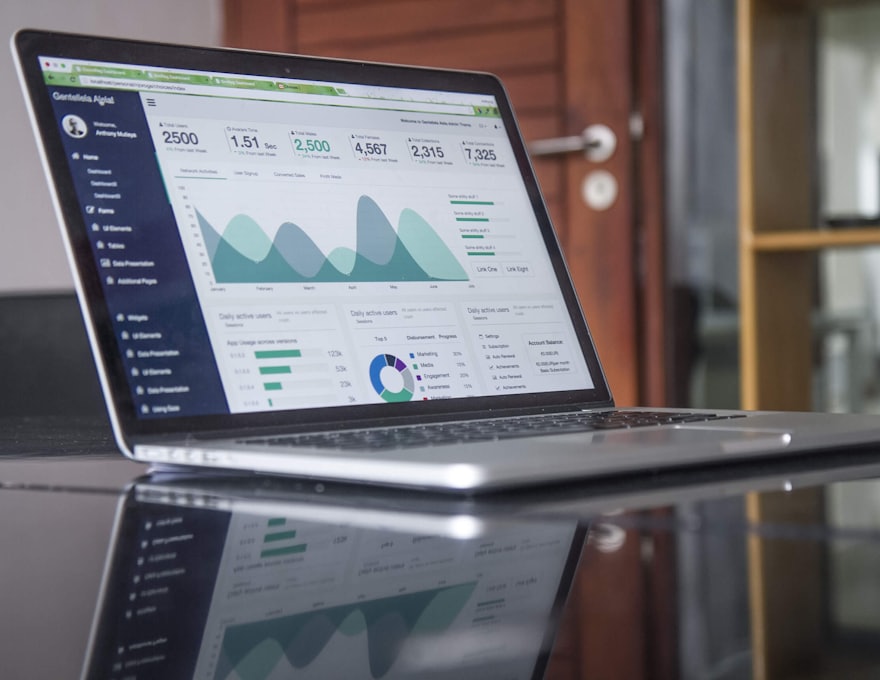
Admissions and fees, appointments and patient records, job cards and attendance, vendors and dispatch — the system your office actually runs on, built around how your people work, including the awkward exceptions they currently work around.
Admin, staff, student, customer or dealer logins with permissions that match real responsibilities, so the front desk cannot see what only the director should — and a dashboard that puts the two or three numbers that drive decisions on the first screen.
Approvals, reminders, renewals and follow-ups that currently depend on someone remembering. The system routes the work, sends the SMS or WhatsApp notification, and keeps the trail of who did what and when.
Stock, orders, invoices and month-end reports in one place instead of three spreadsheets, with printable registers for the people who still want paper and exports in an open format for your accountant.
Payment gateways, SMS and WhatsApp notification providers, your accounting export, attendance devices — connected through an API where one exists, imported on a schedule where it does not.
An application written years ago by a developer who has since moved on, running on software nobody patches. We document what it does, move the data across safely, and rebuild it in stages so the office never stops working.
The same few systems come up again and again here: admission and fee tracking for schools, colleges and coaching institutes around Ranchi and Mesra; appointment and patient records for clinics in Bariatu and Kanke; dispatch, stock and vendor records for traders in Upper Bazar; and job cards, attendance and compliance registers for manufacturing and mining suppliers around Tupudana, Ramgarh and Bokaro. Each of them starts as a spreadsheet that grew a life of its own.
What makes these builds work locally is respecting how the office actually runs. Records get entered from a paper form at the counter, notifications go out over SMS and WhatsApp rather than email, and someone senior wants a printable register at month end. We design for those habits instead of insisting the office change to suit the software, which is the usual reason a new system quietly stops being used by the third month.
We sit with the people who do the work and document how it actually runs, exceptions included. That is usually where off-the-shelf software fails you.
The step costing you the most time gets built and put into real use early, so you see value long before the whole system is finished.
Remaining workflows added around what is already in use, then documentation, training for the staff who will use it daily, and your data exportable in an open format.
If an existing product covers 90% of your need for a fraction of the cost, we will say so. Custom software is a commitment, and it should only be made where it genuinely pays back.
The part that hurts most gets built and put into real use first, rather than a year of development before anyone touches it.
Applications need patching, backups and monitoring far more than brochure sites do. That is already what we do, from an office you can call.
Anything not covered here, just ask — we answer in plain language.
A website presents information; an application does work. If people log in, records change, and the state persists between visits — bookings, admissions, inventory, approvals — it is an application, and it needs a different approach to data, permissions and testing.
Genuinely variable, which is why it is quoted rather than priced on the packages page. Cost tracks the number of distinct user roles and workflows far more than the number of screens. We scope first and give you a fixed figure before any build starts.
Usually. If your existing accounting, ERP or SMS provider exposes an API, we integrate with it. Where there is no API we look at scheduled imports and exports instead — less elegant, but often perfectly sufficient.
Yes. Labels, notices and printed output can be set in Hindi or run bilingually. For counter staff entering records all day this is not a nicety — it decides whether the system gets used properly or worked around.
It is a fair question in this state and we plan for it. Where the work cannot stop, we build the critical screens to tolerate a dropped connection and sync when it returns, and we keep a printable fallback for the counter. Where a short outage is survivable, we say so rather than charging for engineering you do not need.
Yes. Scoping, demos and training all run over video calls, screen-share and WhatsApp, and the application is hosted and monitored by us wherever your office is. Clients in Ranchi can also meet us at the Radium Road office — nobody else needs to travel.
Often, yes. We start by reading what the current system actually does — screens, reports and the data underneath — and write it down. Then we either stabilise and maintain it, or rebuild it in stages with the data migrated, so the office keeps working throughout. We will tell you honestly which of the two makes sense.
You do, on final payment. You get the source and your data in an open format. We are not interested in holding a business hostage to its own system.
Describe the process you want to replace and who needs access. We will scope it and quote a fixed figure before any build starts.
1st Floor, Singh Palace, Radium Road
Near Geetanjali Salon, Ahirtoli
Ranchi, Jharkhand 834001, India
Monday – Saturday, 10:00 AM – 8:00 PM IST
Domain · Hosting & VPS · Email · Design & Development · Ecommerce · Mobile Apps · SEO · Digital Marketing · Maintenance
Tell us the process that is costing you the most hours. If software already solves it, we will point you there instead.